



Proposed Census Rule Could Leave 38 Million Low-Income People Uncounted
A new analysis by CHN
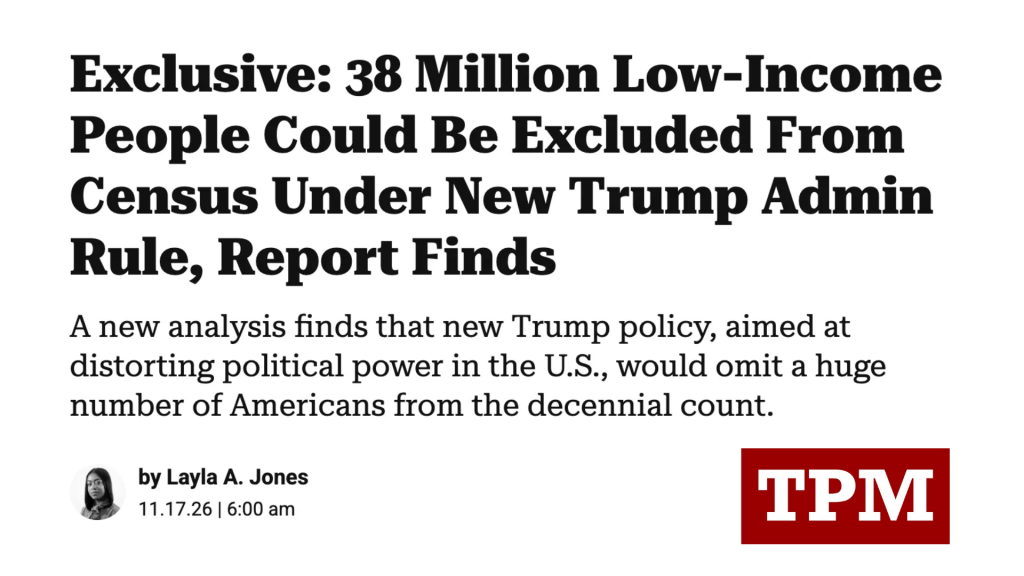
Editor’s note: This blog is based on a new analysis published by the Coalition on Human Needs (CHN), examining the potential consequences of the Commerce Department’s proposed rule for the 2030 Census. The analysis was also featured in Talking Points Memo. An excerpt is included below; read the full article here.
Click here to read the full analysis, or here to download it as a PDF.
The Commerce Department’s September 9, 2026 proposed rule for determining residence in the 2030 Census would require a person’s usual residence to be consistent with and evidenced by their tax records. This could exclude tens of millions of people from the Census, undermining our democracy and diverting critical resources from the people and communities that need them most.
Tens of millions of people may not be counted because they have no tax records.
Many low-income earners are not required to file tax returns because their income falls below the filing threshold. Others may lack W-2s or 1099s, including people without cash earnings and self-employed or gig workers with small income sources.
The Census Bureau found that only 88.5% of people in 2020 had any IRS records included in its study. A Census requiring tax records could exclude more than 38 million people. Nearly 15 million people had only 1099 records, which do not show dependents such as children, spouses, or other family members.
People receiving Supplemental Security Income, veterans whose only income is disability payments, and people experiencing homelessness could also be excluded.
Tax addresses are not necessarily where people live.
People may use a post office box, business address, accountant’s address, or military address on their tax filings. These addresses do not necessarily reflect their usual residence.
A Census Bureau simulation found that more than 30 million people had no matching addresses between IRS records and the 2020 Census. Another 34.17% had conflicting address information.
The proposed rule also creates problems for the approximately 37 million people who move each year. College students, children whose parents share custody, seasonal residents, and households whose membership changes could also be affected.
An inaccurate Census means less representation and fewer resources.
The Census determines House seat apportionment and informs redistricting at the federal, state, and local levels. Census data also guides the allocation of federal and state funds.
Undercounting low-income communities would give those communities fewer representatives and less political power. It would also reduce the amount of federal and state funding flowing to their communities.
Administrative records, including tax records, are important tools for ensuring a complete Census. They should be used to count people who do not respond, not to exclude people from the count.
The proposed rule is unconstitutional, unlawful, and so thoroughly flawed that it must be withdrawn.
Subscribe: