



Resources from around the Coalition: Health care, tax cuts, affordable housing, and more
Editor’s note: The following piece was written by Makenna Whitworth, CHN’s Fall 2018 intern. MaKenna is a senior majoring in political science at Brigham Young University.
Election Day is less than two weeks away, and while Senators and Representatives are home working to get their constituents out to vote, advocates from around the Coalition continue to work hard promoting the interest of the human needs community. Here are some of the important resources CHN’s members have recently released.
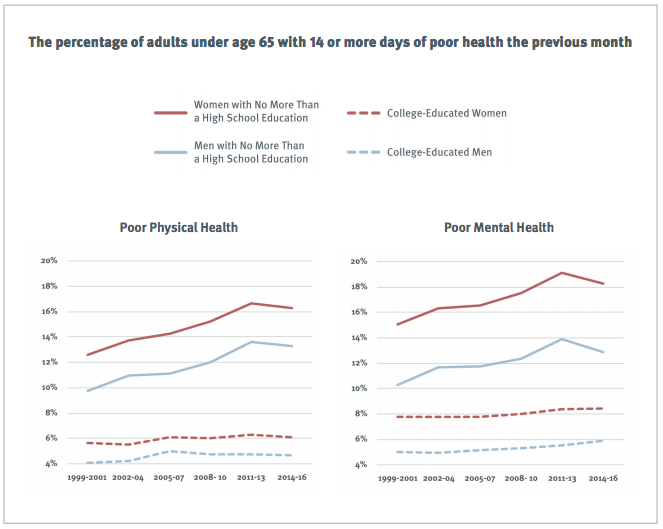
Families USA recently commissioned original analysis of national data documenting the prevalence of serious health problems and barriers to health care access by race, ethnicity, class, gender, and place. Their most surprising finding is that working-class women across lines of race, ethnicity, and geography are particularly likely to experience serious physical and mental health problems, which grew rapidly during recent decades. Other key findings show that working-class women encounter serious financial barriers that limit health care access, and that for certain public health issues, race and ethnicity can overwhelm the effects of geography and class. This report sends a powerful message that, while the Affordable Care Act led to gains for working class people across racial groups, our political system has failed to adequately improve health and health care access for all, particularly for women and people of color. The report calls on policymakers to take necessary steps to improve health in the United States.
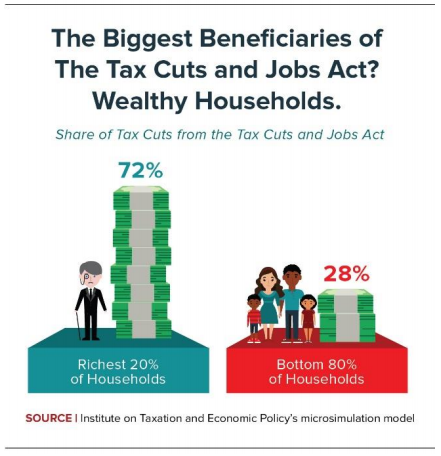
The 2017 Tax Cuts and Jobs Act (TCJA) gave Congress tremendous opportunity to help low-income and middle-class families – particularly those of color – achieve greater wealth and prosperity. Instead, the majority of the law’s $1.9 trillion provided large tax breaks for multi-billion-dollar corporations and wealthy individuals. A new report released by Prosperity Now and the Institute on Taxation and Economic Policy (ITEP) finds that the TCJA not only exacerbates growing economic inequality overall, but amplifies racial wealth divides that are already alarming. The report was recently featured in the New York Times and referenced in CHN Executive Director Debbie Weinsten’s blog post.
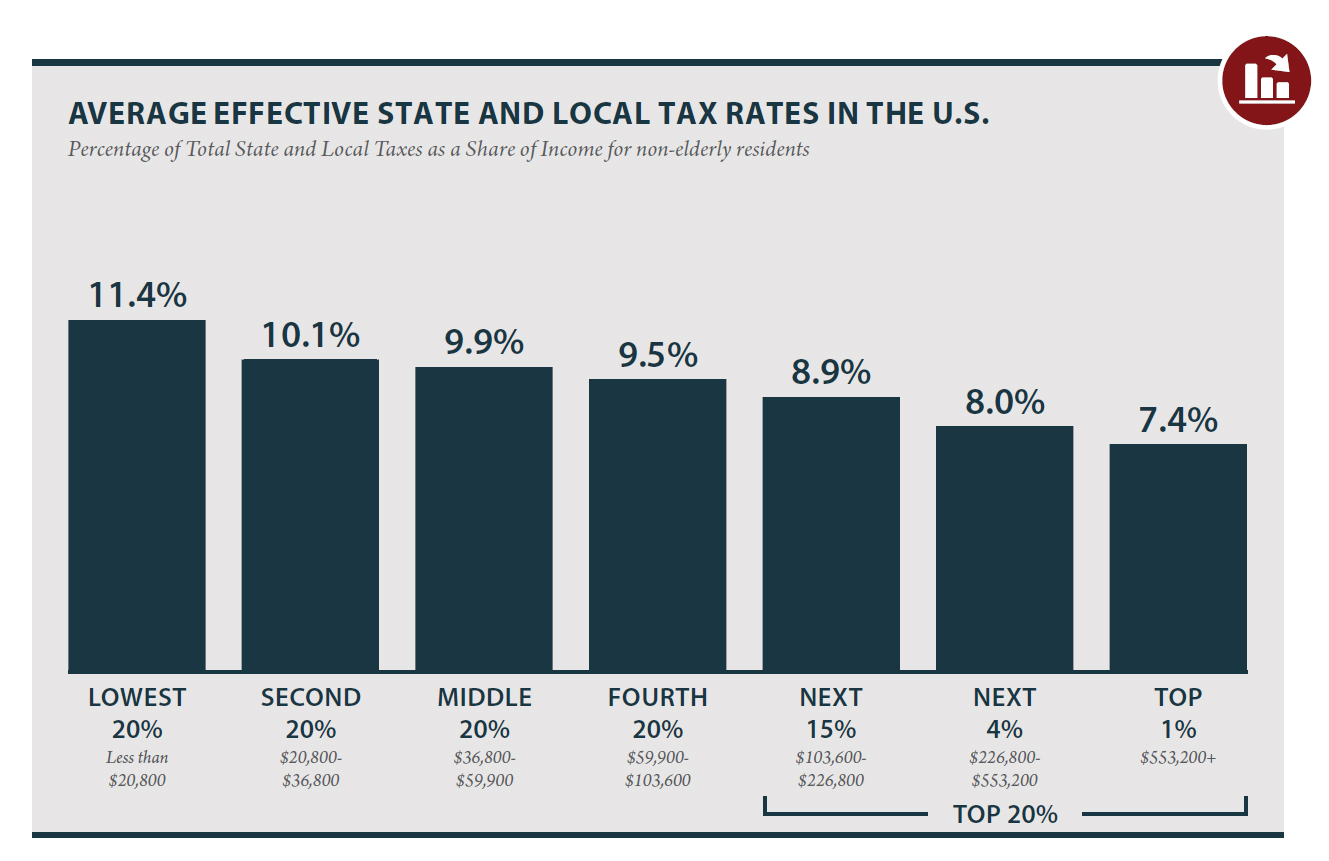 Also new from ITEP is the 6th edition of their Who Pays? report, which assesses tax fairness by measuring effective state and local tax rates paid by all income groups. The report finds that most state and local tax systems are inequitable and upside-down, taking a much greater share of income from low- and middle-income families than from wealthy families. In fact, tax structures in 45 states exacerbate income inequality. According to ITEP’s findings, Washington State has the least equitable tax system, while California has the most equitable. See how your state ranked.

A recent report by the Food Research and Action Center (FRAC) measures how many children had access to afterschool suppers and snacks, and found that the Afterschool Supper Program served 1.2 million children on an average weekday in October 2017, an increase of 11.3 percent, or 124,000 children, from October 2016. As FRAC states in the report, “Federally funded afterschool suppers can be a game-changer for reducing childhood hunger in low-income communities and supporting the establishment, growth, and quality of afterschool enrichment programs.” Check out FRAC’s interactive map to learn the number of children participating in afterschool supper in your state or reference their press release, blog post, or downloadable infographics for more information.
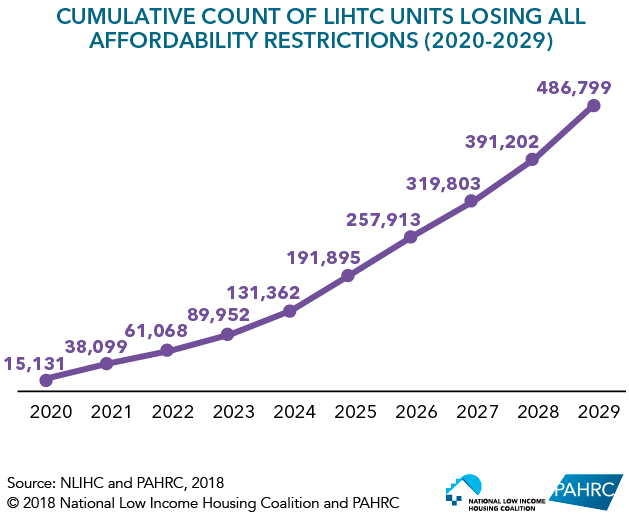 The National Low Income Housing Coalition (NLIHC) and the Public and Assisted Housing Research Corporation (PAHRC) released a new report, Balancing Priorities: Preservation and Neighborhood Opportunity in the Low-Income Housing Tax Credit Program Beyond Year 30. The Low-Income Housing Tax Credit (LIHTC) is the largest national affordable housing program in the U.S., having contributed nearly three million rental homes to the affordable housing stock since its establishment in 1986. By 2030, nearly half a million current LIHTC homes will reach the end of their federally mandated rent-affordability and income restrictions. The report explores how scarce resources for affordable housing lead to the dilemma between preserving affordable homes and promoting mobility for low-income families to move to higher-opportunity neighborhoods.
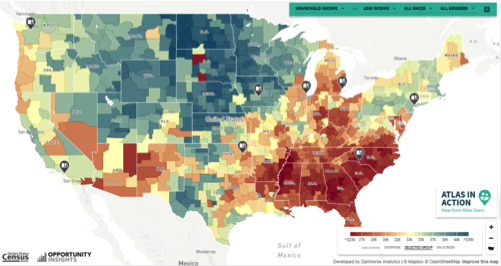
BONUS: This month the U.S. Census Bureau released the Opportunity Atlas, a new interactive tool that provides public access to highly localized data on social mobility, allowing users to conduct custom analyses for specific neighborhoods and to learn which areas of the country offer children the greatest chances for economic opportunity. A research study released with the Opportunity Atlas found that moving to better neighborhoods earlier in childhood can increase a child’s future income by several thousands of dollars. The takeaway from these findings is not that moving is necessarily the best solution for increasing upward mobility, but rather that economic immobility in some areas can be changed. As concluded in this report, “by studying these places using the newly-released data, stakeholders may ultimately be able to replicate their successes and improve outcomes in communities throughout the United States.”
Subscribe: